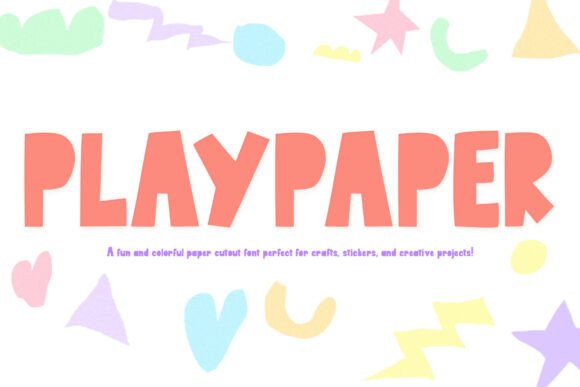
Playpaper: Handmade Charm for Modern Designs
In a digital landscape saturated with sleek, perfect vectors, there's a growing hunger for authenticity. We crave textures that feel human, designs that tell a story of touch and care. Enter Playpaper, a typeface that doesn't just sit on the page—it performs. It’s a cheerful paper cutout style font designed to inject immediate warmth and character into any project. Imagine the joy of a child’s craft project, the satisfying snip of scissors, the deliberate imperfection of a glued edge. That’s the essence of Playpaper. Each letterform is crafted to look as if it was meticulously cut from colorful paper and arranged by hand, offering a tactile, three-dimensional quality that flat digital fonts often miss.
This isn't just another handwritten font. Playpaper occupies a unique space between illustration and typography. Its visual personality is defined by its playful irregularities, subtle shadows, and a sense of movement that makes static text feel alive. For designers, marketers, and creators, it’s a powerful tool for breaking through visual noise and connecting with an audience on a more emotional, nostalgic level. Whether you're building a brand identity for a family-friendly product or crafting social media graphics that need to stop a scroll, Playpaper brings an undeniable charm that feels both personal and professional.
Where Playpaper Truly Shines: From Packaging to Pixels
The true strength of a premium font like Playpaper lies in its versatility across different mediums. It’s not a one-trick pony; it’s a style catalyst. In packaging design, it can transform a simple coffee bag or candle label into something that feels artisanal and gift-worthy. The font’s handmade aesthetic suggests care and small-batch quality, instantly elevating perceived value. For editorial design, think of magazine headlines, pull quotes, or chapter titles in a lifestyle cookbook. Playpaper can make a dense page feel approachable and guide the reader’s eye to key moments of delight.
In the digital realm, its application is equally compelling. A logo design using Playpaper can set a cheerful, approachable tone for a children’s brand, a bakery, or a creative studio. On websites, it works beautifully for hero text, event announcements, or call-to-action buttons where you want to evoke a specific mood. However, as with any display font, context is everything. It’s rarely the right choice for long-form body copy. Its magic is in headlines, titles, and short bursts of text where its personality can be fully appreciated without sacrificing readability.
Practical Guidance for Using This Creative Font
Choosing the right typeface is a strategic decision. Before incorporating Playpaper into your next project, ask yourself: Does the brand or project voice align with warmth, creativity, and a touch of whimsy? If you're designing for a law firm or a luxury tech brand, this might not be your primary font. But for a yoga studio, a indie bookstore, or a sustainable toy company? It could be perfect.
Evaluating project fit is just the first step. Next comes the crucial task of font pairing. A character-rich font like Playpaper needs a stable partner. Pair it with a clean, neutral sans serif font for body text to create a balanced and readable hierarchy. For example, Playpaper for headlines combined with a font like Lato or Open Sans for paragraphs creates a dynamic yet professional layout. Alternatively, pairing it with a simple, classic serif font can create an interesting contrast between playful and traditional. Always test your pairings in context—see how they look on a mobile screen, in a printed mockup, or on a product photo.
When you license a commercial font like Playpaper, review what’s included. Does it have multiple weights or styles? Often, these handcrafted fonts come with alternates, ligatures, or even bonus graphics that can enhance your design. Understanding the full toolkit prevents you from missing out on features that could solve a design problem. Finally, consider readability at various sizes. That charming texture that looks amazing at 72pt might become a muddy blob at 14pt. Always conduct a readability test, especially for critical information.
Beyond Aesthetics: Influencing Perception and Engagement
A font does more than spell words; it communicates values. The choice of Playpaper in your design assets sends a clear message. It tells your audience that your brand is friendly, creative, and values a human touch. This can significantly influence brand perception and recognition. In a crowded marketplace, a distinctive and consistent typographic style becomes a recognizable part of your visual identity. Using Playpaper consistently across your web design, email headers, and printed materials can build a cohesive world that your audience comes to associate with your unique vibe.
From a marketing perspective, this type of creative font can boost engagement. Its inherent cheerfulness is disarming and can make content more shareable. A social media post featuring an inspiring quote set in Playpaper is more likely to feel uplifting and relatable than the same quote in a standard corporate typeface. For content creators and bloggers, it can add a signature flair to featured images or newsletter graphics, making your content instantly recognizable in a feed.
Ultimately, Playpaper is more than just a set of letters. It’s a design solution for anyone looking to bridge the gap between the digital and the handmade. It offers a way to bring the imperfect, joyful spirit of physical craft into the structured world of modern typography. By understanding its personality, respecting its strengths, and applying it with thoughtful strategy, you can leverage this font to create designs that don’t just communicate—they connect. So, the next time your project calls for a dose of authenticity and fun, consider giving it a little Playpaper magic.