Mogenta: Where Bold Structure Meets Artistic Flow
When you’re building a brand, every element tells a story. The colors you choose evoke emotion, and the images you select frame the narrative. But nothing anchors your visual identity quite like your typography. A typeface isn't just a set of letters; it is the voice of your brand before anyone reads a single word. If you are looking for a voice that commands attention while exuding a sense of modern artistry, the Mogenta typeface is a design asset worth exploring. It bridges the gap between rigid geometry and fluid motion, offering a solution for designers, entrepreneurs, and creatives who need their work to stand out in a crowded market.
Anatomy of a Statement Typeface
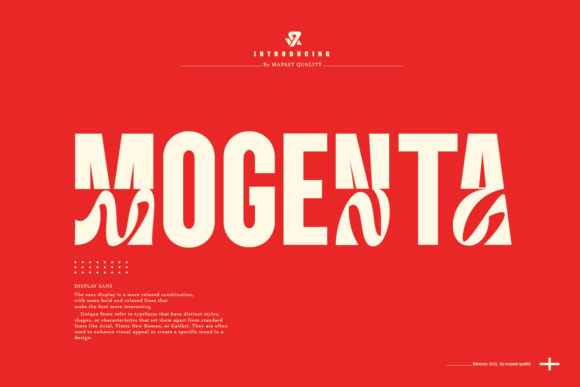
At first glance, Mogenta presents a fascinating contradiction. It functions as a display sans-serif, yet it refuses to be boring. The overall style blends bold, geometric shapes with unexpected, flowing curves. This isn't just a standard block font; it is a carefully crafted visual tool designed to capture the nuances of modern typography.
The distinction between the upper and lower case characters is where this premium font truly shines. The uppercase letters are strong, blocky, and imposing. They feature clean, uniform thickness and sharp edges that scream stability and strength. This makes the uppercase style perfect for high-impact headers or titles where readability is paramount. However, switch to lowercase, and the personality shifts. The characters introduce swirled, curvaceous shapes that contrast sharply with the bold strokes above. These decorative flourishes inject a sense of motion and uniqueness, transforming standard text into artistic design.
The Psychology of Color and Contrast
Typography rarely exists in a vacuum, and the presentation of Mogenta highlights how a typeface interacts with color. Often showcased in red and cream, the font takes on a vintage yet bold aesthetic. The warmth of the cream softens the intensity of the red, allowing the font’s structural elements to pop without feeling aggressive. This color combination helps emphasize the contrast between the sharp uppercase edges and the swirling lowercase tails.
For small business owners and marketers, this is a practical lesson in visual hierarchy. When using Mogenta in your own projects, consider how the font’s inherent boldness pairs with your color palette. Because the typeface has such a strong personality, it can easily anchor a design, reducing the need for heavy graphical elements. It creates a sophisticated or creative tone that feels expensive and intentional, helping to elevate brand perception instantly.
Strategic Applications: From Logos to Packaging
Knowing a font looks good is one thing; knowing where to use it effectively is another. Mogenta is versatile within the realm of "statement" design. It is not intended for long-form body text, but rather for moments where you need to grab attention.
Here are practical areas where this typeface excels:
- Logo Design and Brand Identity: The combination of geometric strength and artistic flair makes Mogenta ideal for logos that need to feel both professional and creative. It works particularly well for boutique agencies, creative studios, or lifestyle brands.
- Packaging Design: On a shelf, you have seconds to make an impression. The bold blockiness of the uppercase letters ensures legibility from a distance, while the decorative lowercase elements invite closer inspection.
- Event Promotions: Whether it’s a music festival, an art gallery opening, or a high-energy product launch, the font’s sense of motion translates well to posters and flyers.
- Social Media Graphics: In the fast-scrolling environment of Instagram or TikTok, Mogenta stops the thumb. It is distinct enough to be recognizable even in small thumbnail sizes.
Mastering Font Pairings and Readability
One of the most common questions regarding display fonts is how to pair them. Because Mogenta has such a distinct personality—blending a sans-serif structure with script-like flourishes—it requires a complementary partner that doesn't compete for attention.
Avoid pairing it with other decorative, handwritten, or script fonts. Instead, look for a neutral, clean sans-serif or a classic serif font for your body copy. A geometric sans-serif works well to mirror the uppercase structure of Mogenta, while a traditional serif font can add a touch of editorial elegance. The goal is to let Mogenta handle the headlines and emotional hooks, while the secondary font handles the information delivery.
When evaluating readability, context is key. In large sizes, such as for web design headers or print advertisements, the font is highly legible. However, because of the swirled details in the lowercase letters, you should avoid using it for small body text or dense paragraphs. The artistic details that make it beautiful at 48pt will become visual noise at 12pt.
Evaluating Fit and Commercial Value
For content creators and publishers, choosing a font is an investment. Before integrating Mogenta into your toolkit, review the included styles and weights. Does it offer the flexibility you need for different contexts? Test the font pairing process early in your design phase. Mock up a social media post, a business card, and a website header to see how the typeface behaves across different mediums.
Finally, consider the commercial licensing. As a premium font, Mogenta is a professional asset. Ensure your license covers your specific usage, whether that is for client work, merchandise, or digital products. Investing in high-quality typography is one of the fastest ways to improve the professionalism of your work. By choosing a typeface like Mogenta, you are not just buying letters; you are buying a visual language that communicates creativity, confidence, and contemporary style.